


 |
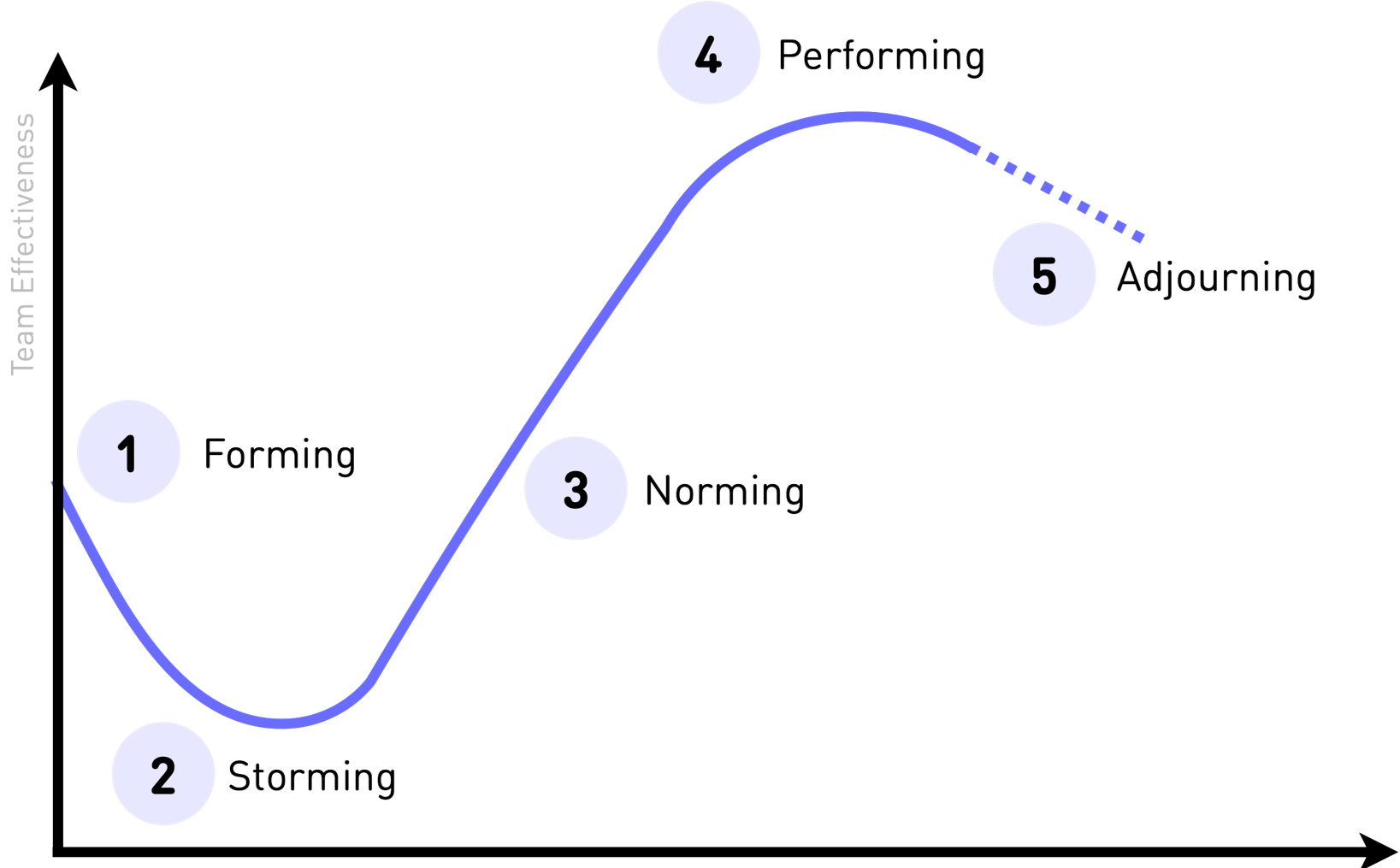
Every team goes through a growth journey. No matter how skilled the individuals are, how clear the project is, or how solid the methodology may be - a group doesn’t become a “team” overnight. Bruce Tuckman described this brilliantly in his 1965 model, still one of the most widely used references in Agile, Scrum, and Project Management. According to Tuckman, every team evolves through five stages of development: The Scrum Master - the servant leader of the Scrum Team - plays a crucial role in each of these stages. Scrum Masters are not generic facilitators: they help the team evolve, overcome conflict, find rhythm, and become truly autonomous. Let’s explore how. |
1. Forming: The Team Is Born
In this phase, people are getting to know each other. They’re being onboarded to the project and Scrum, cautious, and slightly reserved. There’s excitement, but also uncertainty: “How will we work together? What are the expectations? Who decides what? What’s my role? What’s expected of me and the team?”. Here, the Scrum Master is primarily a builder of psychological safety. What the Scrum Master can do:
- Facilitate a clear kick-off with goals, roles, and expectations.
- Introduce the Scrum framework: events, artifacts, responsibilities.
- Encourage light team-building activities to break the ice.
- Help the Product Owner present an inspiring vision.
- Shield the team from external pressure while it takes shape.
- Define the Team Charter.
- Help Developers understand the project’s stakeholders.
Key message: “We’re here to build something together, and I’ll help you do it in the best way. You’re not alone.”
Useful techniques:
- Working Agreements: Define team rules for communication, availability, conflict management, and quality.
- Product Vision Workshop: Help the PO share the vision and align the team.
- User Story Mapping (Jeff Patton): Build shared understanding of the product.
- Team Canvas: Align values, goals, roles, and expectations.
- Structured Icebreakers: “Personal Maps”, “History of Work”, “Draw the Team”.
- Stakeholder Analysis: Understand project stakeholders.
- Scrum Values Game: A PMProgetti-designed game to explore Scrum values in depth.
2. Storming: The Team Starts Working, Conflicts Arise
This is the most delicate phase. People begin expressing different opinions, tensions emerge, priorities and responsibilities are debated. Many teams get stuck here. The Scrum Master becomes a facilitator of healthy conflict. What the Scrum Master can do:
- Facilitate difficult conversations using Liberating Structures, Lean Coffee, Constellation.
- Help the team distinguish between causes and effects, process vs. personal issues.
- Clarify the difference between positions and interests in conflict resolution.
- Guide retrospectives focused on communication, collaboration, and roles.
- Promote transparency: prevent hidden conflicts.
- Protect the team from external stressors.
Key message: “Conflict is normal in a team - it unlocks communication. Let’s use it to learn and grow.”
Useful techniques:
- Liberating Structures: 1-2-4-All: Surface opinions without direct confrontation; Heard, Seen, Respected: Manage emotional conflict; TRIZ: Reveal dysfunctional behaviors.
- Retrospective “5 Whys”: Get to the root of problems.
- Conflict Mapping: Separate process issues from personal ones.
- Nonviolent Communication (NVC): Facilitate difficult conversations.
- Conflict Game: A PMProgetti-designed role-play game to explore different perspectives in conflict.
3. Norming: The Team Finds Its Rhythm
After Storming, the team begins to stabilize relationships, processes, and habits. People listen more, collaborate better, and build trust. The Scrum Master becomes a coach who consolidates good practices, laying the foundation for continuous improvement. What the Scrum Master can do:
- Reinforce shared rules (Definition of Done, Definition of Ready, Working Agreements).
- Help improve backlog quality and estimation.
- Facilitate retrospectives focused on continuous improvement.
- Promote autonomy and ownership.
- Help the team measure progress (velocity, lead time, flow).
- Support the Product Owner in reinforcing the project’s message.
Key message: “We’ve found balance - now let’s stabilize our processes and strengthen collaboration.”
Useful techniques:
- Definition of Done + Definition of Ready: Establish quality and readiness standards.
- Structured Refinement: Planning Poker, T-Shirt Sizing, Three Amigos.
- Kaizen Board: Make continuous improvement visible.
- Retro “Start / Stop / Continue”: Simple and effective for consolidating practices.
- Communication Game: A PMProgetti-designed role-play to explore all dimensions of communication - content, nonverbal, emotional.
4. Performing: The Team Takes Off
This is when the team is autonomous, mature, and effective. People collaborate naturally, solve problems independently, make quick decisions, and maintain high quality. The Scrum Master becomes a servant leader who removes obstacles and protects excellence. What the Scrum Master can do:
- Remove complex impediments the team can’t handle alone.
- Shield the team from interference, scope creep, and external pressure.
- Encourage innovation, experimentation, and continuous improvement.
- Support the Product Owner in strategy and value delivery.
- Prepare the team for potential regressions (new members, context changes).
- Challenge the team to grow even stronger.
Key message: “We’re a high-performing team - and we can always improve.”
Useful techniques:
- Value Stream Mapping: Optimize flow and reduce waste.
- Advanced Metrics: Lead Time, Cycle Time, Throughput, Flow Efficiency, Cumulative Flow Diagram.
- Experiment Canvas: Introduce continuous innovation.
- Delegation Poker (Management 3.0): Increase autonomy and ownership.
- Creativity Game: A PMProgetti-designed challenge game to boost team creativity.
5. Adjourning: The Team Disbands (and leaves a legacy)
Not all teams stay together forever. Sometimes a project ends, roles change, or the organization evolves. This is the Adjourning phase, added by Tuckman in 1977 - when the team disbands or members leave. Often overlooked, this phase is essential. People may feel satisfaction, nostalgia, uncertainty, even anxiety. The risk is closing too quickly, without honoring what was built. Here, the Scrum Master becomes a guardian of memory and transition. What the Scrum Master can do:
- Facilitate a final retrospective focused on successes, lessons learned, and key moments.
- Celebrate achievements: publicly recognize each member’s contribution.
- Help people process closure, especially in cohesive teams.
- Document effective practices for future reuse.
- Support transitions to new projects or teams.
- Collaborate with management to preserve know-how.
Key message: “The team is disbanding - but what you’ve built must remain.”
Useful techniques:
- Retrospective “Appreciation Wall”: Members recognize each other’s contributions.
- Timeline Celebration: Review key moments, successes, and challenges.
- Lessons Learned Canvas: Transfer knowledge to other teams.
- Knowledge Transfer Plan: Prevent loss of know-how.
- Closing Ceremony: A celebration that gives meaning to the end of the cycle.
Why This Model Is So Valuable in Agile? Because it reminds us of a simple truth: Teams don’t become high-performing by accident. It takes time. It takes guidance. It takes a safe context. It takes a Scrum Master who can read team dynamics and intervene at the right time, in the right way. And above all, it takes awareness: Any team can regress to a previous stage when something changes - new members, new pressures, new technologies. Tuckman’s model helps us understand what’s happening and how to respond. The worst thing you can do in a Scrum project? Removing the Scrum Master or downplaying their importance: it takes very little to destroy a team.
If you’d like to explore Agile techniques to empower your team, feel free to contact us at: