|
|
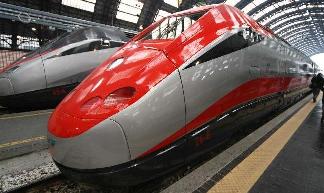
The case: When we first walked into the company, the atmosphere was a mix of enthusiasm and frustration. The client - an important manufacturer of braking systems for trains - had just created its new Project Management unit. It was a long‑awaited strategic step. But, as often happens, the first months had raised more questions than answers. The Project Managers were skilled (many of them certified) and highly motivated, yet a shared direction was missing. Projects were starting late, internal responsibilities were unclear, departments communicated in fits and starts, and meetings with the customer had become chaotic rituals that left everyone with more doubts than clarity. It was clear that the company needed not just tools, but an integrated, shared methodology and a new way of working together. |
|
PMProgetti’s intervention: At PMProgetti, we believe that every transformation begins with listening. That’s why we started with an in‑depth assessment of the organization: people, processes, documents, habits, strengths, and critical issues. What emerged was clear:
This wasn’t a matter of “fixing” something. It required building a system. Together, we selected a pilot project—one of the strategic ones—where every improvement would have an immediate impact. From there, we began working on three levels: Quick Wins - immediate, concrete actions capable of producing visible results within weeks:
Structural Interventions - the foundations of the new way of working:
Operational Support - we didn’t just “advise”, we worked side by side with the Project Manager, applying the methodology together and adapting it to the company’s reality. The Result, when method becomes culture: After just a few weeks, the pilot project began to change shape. And then the moment we were hoping for arrived: the company decided to extend the new model to all projects. It was no longer “the pilot project.” It was becoming the new way of working. Why This Story Matters? Because it highlights a simple truth: a Project Management department is not born mature. It is built, refined, and grows alongside the people who live it every day. And when the right balance between method, tools, and support is found, results always follow. Listening is - and always will be- the key to every effective solution. |
|
|
|
The case: When the Quality function of a consulting firm specializing in System Integration felt the need to verify how closely its Project Management system was aligned with the ISO 21500 standard, a crucial question emerged: Are we managing our projects in the most effective, consistent, and internationally recognized way? |
|
PMProgetti’s intervention: To obtain a clear answer, the company chose to rely on PMProgetti. Our work began with attentive listening to the organization’s internal needs and day‑to‑day operational dynamics. From there, we launched a comprehensive assessment of the entire Project Management system, with the goal of evaluating not only its compliance with ISO 21500, but also the overall maturity of its processes and their ability to support the company’s growth. To achieve this, we used our proprietary assessment model, developed through the integration of best‑in‑class international practices from PMI, IIBA, and ISO. This approach allowed us to analyze each area with methodological rigor while remaining sensitive to the company’s culture and operational specificities. The added value came from the expertise of our consultants: professionals who understand ISO 21500 not only in theory, but also in its regulatory evolution, having directly contributed to the drafting of the related UNI standard. This experience enabled us to interpret the standard in depth and translate it into concrete, clear, and immediately actionable recommendations. The outcome was an accurate picture of the current state, accompanied by practical suggestions that helped the company strengthen its Project Management system and move confidently toward full alignment with ISO 21500. |
|
|
|
The case: There were more than 200 ongoing projects, four offices spread across Italy, and dozens of teams working every day to deliver technological solutions to their clients. A major ICT company, accustomed to integrating complex systems, suddenly found itself facing a new challenge: bringing order to its internal knowledge and defining a Project Management methodology capable of supporting its growth and the newly launched quality certification initiative. The issue wasn’t competence. It was dispersion. Valuable information lived inside individual teams, personal documents, chats, and emails. Every project was its own universe. And the company knew it couldn’t continue this way. |
|
PMProgetti’s Intervention: When we stepped in, we began by listening. We observed the projects, spoke with the teams, analyzed workflows and resource competencies. To do this, we used our proprietary assessment tool, which allowed us to capture a precise picture of the context and the organization’s real needs. From that picture, a simple truth emerged: the company needed a clear, shared, and sustainable Project Management methodology, and a Knowledge Management system that would enable people to truly collaborate- across offices and across projects. From Chaos to Structure, the journey: We designed the project management methodology using a phased approach based on continuous improvement. No sudden revolutions: we started with quick wins, those small, immediately useful interventions that help teams breathe and quickly demonstrate the value of change. In parallel, we analyzed the main Knowledge Management platforms available on the market. We evaluated them by comparing functionality, scalability, integration, and usability. The choice became clear. And from there, implementation began:
The Result, Knowledge that finally flows: Today, the Knowledge Management system is used by more than 2,000 people. The value is clear: from chaos to collaboration. The Project Management methodology has become a shared reference point—a common language that unites teams and offices. The company not only achieved its quality objectives but also built a solid foundation for future growth, with greater awareness and far less dispersion. |
|

|
|
The case: When we first entered the organization, we found a highly skilled technical structure and a strong willingness to improve, coupled with the awareness that several key processes required a fundamental review. The client, a well-established engineering company, was simultaneously managing plant maintenance activities, infrastructure refurbishment projects, and construction works supporting its core business. Over the years, the increasing number and complexity of projects had highlighted the need to rethink both the maintenance model and the overall project management approach. Maintenance activities were often handled reactively, making it difficult to define priorities, schedule interventions, and allocate resources effectively. At the same time, the Engineering Department was required to manage a growing number of contracts and projects without standardized processes for planning, monitoring, and controlling activities. Information was scattered across different systems and functions, responsibilities were not always clearly defined, and coordination between maintenance, engineering, procurement, and external contractors risked generating inefficiencies and delays. It became clear that the company needed more than new operational tools. It required an integrated management model capable of connecting maintenance, contract management, and project control within a single strategic framework. An important cultural transformation was also necessary. |
|
PMProgetti’s intervention: As always, our work began by listening. We conducted a comprehensive assessment of maintenance and project management processes, analyzing operational workflows, contractual documentation, intervention planning methods, and project control mechanisms from both a technical and economic perspective. The assessment highlighted several key findings:
Addressing individual issues would not have been enough. What was needed was the development of a coherent and sustainable management system. We therefore focused our efforts on three main areas. Redefining the Maintenance ModelWe supported the client in reviewing and redesigning its predictive and reactive maintenance strategies by establishing shared criteria for intervention planning, priority classification, and asset performance monitoring. The objective was to move from a predominantly emergency-based approach to a preventive maintenance model, increasing asset reliability and reducing the impact of failures on operational continuity. Supporting the Engineering FunctionWe worked alongside the Engineering Department to define and structure contracts related to maintenance activities, plant refurbishment projects, and construction works. Standardized models and criteria were introduced for contractor management, contract performance monitoring, and the control of key project milestones. Project Management and ControlWe implemented tools and methodologies to plan, monitor, and control the entire project lifecycle. For each project, roles, responsibilities, control points, and performance indicators were clearly defined, providing greater visibility over schedules, costs, risks, and expected outcomes. Our support went beyond process design. We worked side by side with company teams to apply the new operating model in practice and ensure its successful adoption. The Results: From Intervention to Structured ManagementOver the following months, the new approach began to deliver tangible results. Maintenance activities became more planned, predictable, and controllable, with a greater ability to anticipate issues and schedule interventions proactively. This led to a significant reduction in maintenance costs. The Engineering Department gained more effective tools for managing contracts and suppliers, while projects benefited from improved transparency in planning and progress monitoring. Most importantly, the company developed a more integrated way of working, in which maintenance, engineering, and project management functions began to share objectives, information, and responsibilities. Because every sustainable transformation is built on the balance between processes, competencies, and collaboration. And because real change is not about introducing new tools, but about creating an operating model that enables people to work better together, every day. |
|